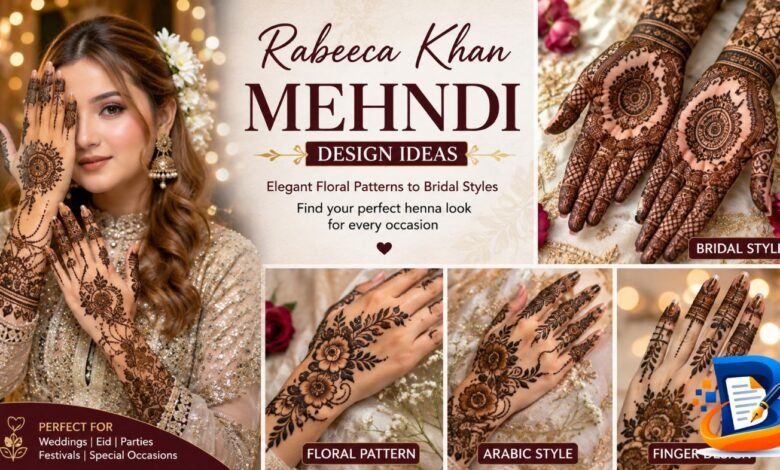
If you are searching for Rabeeca Khan mehndi design, you are probably looking for elegant henna inspiration that feels festive, modern and suitable for weddings, Eid, parties or traditional functions. Rabeeca Khan’s mehndi looks have attracted attention because they combine the richness of South Asian henna with contemporary styling.
Her wedding-related mehndi appearances in 2025 also gave fans plenty of inspiration. Reports from her Mehndi and Qawwali celebrations showed her wearing a highly embellished traditional outfit while displaying henna as part of the overall bridal look.
However, copying a celebrity look exactly is not always necessary. The better approach is to understand the elements that make the design attractive and then adapt them to your own hand shape, outfit, event and personal taste.
This guide explains the different styles you can take inspiration from, how to choose between simple and heavy patterns, which hand areas deserve attention, and how to communicate your preferred design to a mehndi artist.
What Makes Rabeeca Khan Mehndi Design Popular?
The appeal of a Rabeeca-inspired mehndi design comes from its balance. Traditional South Asian patterns can be highly detailed, while modern designs often leave more open space. Combining these approaches creates a look that can feel both festive and contemporary.
Many designs inspired by Rabeeca Khan use floral elements, delicate lines, Arabic-style flowing patterns and detailed finger work. Some are relatively open and wearable, while others are more suitable for a bridal celebration.
It is useful to remember that the phrase “Rabeeca Khan mehndi design” can refer to both designs seen on Rabeeca and henna patterns created by artists who take inspiration from her overall style. Online design galleries and henna tutorials use the phrase in this broader sense.
For an Indian bride or wedding guest, that distinction matters. You may like the overall look without needing to reproduce every detail.
Rabeeca Khan Mehndi Design Inspiration From Her Wedding Looks
Rabeeca Khan’s 2025 wedding celebrations provide an important source of inspiration for people searching for her mehndi style. Coverage of her Mehndi and Qawwali night described an ice-blue or turquoise-toned traditional outfit decorated with silver embellishments, mirror work and sequins.
The important lesson is not simply the colour of the outfit. It is the coordination between the outfit, jewellery, hairstyle and henna.
When your clothes already contain substantial embroidery or mirror work, an extremely dense mehndi design can sometimes compete visually with the outfit. A balanced pattern can make the hands stand out without making the complete look feel overcrowded.
Rabeeca’s wedding-related mehndi coverage also shows why celebrity-inspired designs work best as mood boards. Instead of asking an artist to reproduce a photograph exactly, you can select the parts you like, such as floral motifs, finger detailing, open spaces or a particular back-hand composition.
Simple Rabeeca Khan Mehndi Design
A simple Rabeeca-inspired design is ideal if you want stylish hands without full bridal coverage.
The easiest approach is to keep the centre of the palm relatively open and build the design around one main floral or leafy motif. A few curved vines can then connect the central motif to the fingers.
This style works particularly well for college functions, Eid celebrations, family events and smaller wedding functions. It also suits people who prefer a lighter appearance.
Another option is to focus on the back of the hand. A floral trail beginning near the wrist and moving towards one or two fingers can create an elegant composition without covering the entire hand.
The key is spacing. Simple mehndi looks attractive when the empty areas are intentional rather than accidental.
Floral Mehndi Designs Inspired by Rabeeca Khan
Floral motifs are among the most versatile elements for a Rabeeca-inspired design.
A large flower can become the centre of attention, while smaller leaves and buds can extend the composition. Artists can also combine flowers with fine mesh, dots, curved stems and small paisley details.
For a softer look, choose flowers with thin outlines and limited filling. For a richer wedding appearance, the same flowers can be surrounded by shaded petals and dense leaf work.
Floral patterns are also easy to customise. You can make them larger for a bold bridal design or smaller for a festive guest look.
Arabic-Style Rabeeca Khan Mehndi Design
Arabic-inspired henna is another useful direction when creating a Rabeeca-inspired look.
Arabic patterns generally make strong use of flowing vines, large floral motifs and visible negative space. This creates a design that can look elaborate without covering every part of the hand.
A diagonal composition is particularly effective. The pattern can start near one side of the wrist, move across the hand and finish around a finger.
This approach is suitable for someone who wants a fashionable look but does not want traditional full-hand bridal mehndi.
The design can also be extended onto the forearm for a more dramatic appearance.
Finger Mehndi Inspired by Rabeeca Khan
Finger detailing can completely change the appearance of a mehndi design.
Instead of filling every finger from base to tip, you can create small patterns on selected fingers. Fine lines, tiny flowers, rings, leaves and geometric details can work together without making the design excessively heavy.
This is particularly useful when the palm or back of the hand already has a larger motif.
If you are wearing statement rings or other hand jewellery, consider leaving some areas less detailed. That allows the jewellery and mehndi to complement each other rather than compete for attention.
Finger mehndi is also a practical option when you want a celebrity-inspired look without spending as much time on a full bridal pattern.
Back Hand Rabeeca Khan Mehndi Design
The back hand is one of the best places to experiment with a modern celebrity-inspired design.
A central flower surrounded by curved leaves can create a balanced look. Alternatively, you can use a mandala-style centre and connect it to the wrist through thin lines.
Another attractive approach is to create a bracelet effect around the wrist and connect it to a floral trail on the hand.
For a modern Indian wedding guest, an open back-hand design can look especially elegant with traditional bangles or bracelets.
The advantage of this style is that the artist can create a visually detailed design while still leaving plenty of skin visible.
Front Hand Rabeeca Khan Mehndi Design
Front-hand mehndi gives you more room to experiment with traditional motifs.
A central mandala can be surrounded by flowers, leaves and fine patterns. You can also divide the palm into sections, using one motif in the centre and smaller details towards the fingers.
For a bridal function, the artist can extend the design towards the wrist and forearm. For a simpler occasion, the pattern can stop around the wrist.
If you like the Rabeeca-inspired aesthetic but want an Indian touch, ask your artist to combine modern open spaces with familiar Indian motifs such as paisleys, peacocks, flowers and jaali patterns.
Bridal Rabeeca Khan Mehndi Design
A bridal design needs a different level of planning from a simple party mehndi.
Bridal henna often covers a much larger area, so the composition becomes more important. The artist has to consider how the design moves from the palm to the wrist and then towards the forearm.
A Rabeeca-inspired bridal pattern can combine traditional bridal detailing with modern negative space. For example, one hand can feature a central floral composition while the other uses a complementary pattern.
If you want portraits, names or wedding-related details included, discuss them with your artist before the appointment. They can then plan the surrounding elements instead of trying to insert the detail at the last moment.
The final design should look cohesive from a distance as well as close up.
Rabeeca Khan Mehndi Design for Eid
Eid is a perfect occasion for a lighter version of this style.
You do not necessarily need full bridal coverage. A floral back-hand pattern, elegant finger detailing or a small Arabic-inspired composition can work beautifully with an Eid outfit.
For an Indian Eid celebration, consider matching the visual weight of the mehndi with your clothes. A heavily embroidered outfit can pair nicely with a more open design, while a simple kurta or festive suit can accommodate a slightly richer pattern.
The goal is to create harmony rather than make the mehndi the only focal point.
Rabeeca Khan Mehndi Design for Wedding Guests
Wedding guests often want something attractive but not as elaborate as bridal mehndi.
A medium-sized back-hand pattern is a practical choice. You can combine one large flower with leaves, curved vines and light finger detailing.
Another option is a half-hand design. This covers enough area to look festive while keeping the application relatively manageable.
For sangeet and mehndi functions, slightly bolder patterns can work well because they are often paired with colourful outfits and jewellery.
For a formal wedding ceremony, a more delicate composition may look better with a detailed saree, lehenga or anarkali.
How to Choose the Right Design for Your Hand
The same mehndi pattern can look different on different hands. Therefore, choosing a design only because it looks beautiful in a photograph may not give you the same result.
If you have long fingers, vertical floral trails and elongated motifs can complement their shape. If you prefer a compact appearance, circular motifs and clustered floral patterns can create a fuller visual effect.
For smaller hands, extremely dense designs may make the hand appear visually crowded. Open spacing can help maintain definition.
The size of your hand should also influence the scale of individual motifs. Large flowers can look impressive on a broad palm, while smaller floral details may work better for a more compact hand.
A skilled mehndi artist can adjust the proportions without changing the overall character of your chosen design.
Comparing Different Rabeeca-Inspired Mehndi Styles
| Design style | Overall appearance | Best suited for | Coverage |
|---|---|---|---|
| Simple floral | Light and elegant | Eid, casual functions, small celebrations | Low |
| Arabic-inspired | Flowing and modern | Parties and wedding guests | Medium |
| Finger-focused | Delicate and fashionable | Minimalist looks | Low |
| Back-hand floral | Stylish and balanced | Weddings and festive events | Medium |
| Traditional bridal | Detailed and rich | Bridal functions | High |
| Floral and jaali | Intricate yet structured | Weddings and formal events | Medium to high |
This comparison is useful because “Rabeeca Khan mehndi design” does not represent one single pattern. You can interpret the style according to the occasion and the amount of coverage you want.
How to Ask a Mehndi Artist for a Rabeeca-Inspired Design
Communication is important when requesting a celebrity-inspired mehndi.
Instead of saying only “I want Rabeeca Khan mehndi design”, show the artist a reference image and explain what you specifically like about it.
You might prefer the floral work but dislike dense finger detailing. Alternatively, you may like the overall composition but want more traditional Indian motifs.
Explain whether you want a simple, medium or heavy design. Also tell the artist whether the mehndi should cover the palm, back of the hand, fingers, wrist or forearm.
This small amount of preparation can prevent misunderstandings.
It is also better to ask for an inspired adaptation rather than expecting an exact copy. Every artist has a different drawing style, and a design adjusted to your hand will usually look more natural.
How Outfit and Mehndi Should Work Together
Your mehndi should be considered part of the complete outfit.
If your lehenga or saree has heavy embroidery, mirror work or sequins, an extremely dense mehndi pattern may create too much visual detail around the hands.
On the other hand, if your outfit is relatively simple, detailed henna can become a beautiful focal point.
Rabeeca Khan’s wedding look demonstrates the importance of this coordination. Reports from her Mehndi and Qawwali night highlighted the relationship between her embellished traditional outfit, jewellery and overall styling.
For Indian celebrations, you can apply the same principle to lehengas, sarees, shararas, salwar suits and Indo-Western outfits.
Choosing Mehndi for Different Wedding Functions
The function should influence the complexity of the design.
For a haldi or small family gathering, a simple floral or Arabic-inspired pattern may be enough. For a mehndi or sangeet function, you can choose a more colourful and detailed visual style.
For the wedding day itself, brides may prefer fuller coverage with traditional motifs and personalised elements.
If you are attending several functions, changing the mehndi style between events can also keep the looks distinct. A light design for one function and a more elaborate pattern for another can prevent your overall styling from looking repetitive.
Important Considerations Before Applying Mehndi
Design is only one part of the mehndi experience. The paste and application process also deserve attention.
Choose a reputable mehndi artist and discuss the design before the appointment. If you have sensitive skin or have previously reacted to henna products, be particularly careful about what is being applied.
Natural henna has a characteristic staining process, and the final colour does not appear instantly. The visible stain develops over time after the paste is removed.
Be cautious with products marketed as “black henna”. Some products sold under that name may contain ingredients that can cause skin reactions. For safety, check the ingredients and ask the artist what product they intend to use rather than assuming every dark-coloured henna paste is the same.
A beautiful design is not worth compromising skin safety.
Rabeeca Khan Mehndi Design Ideas for Different Preferences
If you prefer minimal styling, a small floral motif on the back of the hand with two or three decorated fingers can give you the desired celebrity-inspired feel.
If you prefer traditional designs, combine flowers, paisleys, jaali work and leafy vines with modern spacing.
If you want something bridal, extend the design from the hands towards the forearms and introduce personalised elements that have meaning for you.
If you like contemporary fashion, choose a diagonal Arabic composition with large flowers and plenty of open space.
There is no requirement to follow one style from beginning to end. Mixing elements can actually produce a more personalised design.
Why Reference Images Matter
Reference images are particularly useful for mehndi because descriptions can be interpreted differently.
The words “simple bridal mehndi” could mean a light floral design to one artist and a medium-coverage traditional pattern to another.
A photograph immediately communicates the scale, spacing, motif placement and level of detail.
When collecting references, focus on the design itself rather than the celebrity identity. Save images showing the specific hand placement or motif that you like.
You can then ask your artist to create an original composition using those visual ideas.
This approach is especially useful for Rabeeca-inspired designs because online galleries contain many different interpretations of her style.
Common Mistakes to Avoid
One common mistake is choosing a design that is too dense for the occasion. A bridal pattern may look beautiful in photographs but can feel excessive for a small family event.
Another mistake is ignoring the outfit. Mehndi should complement the colours, embroidery and jewellery rather than compete with them.
Trying to copy a reference photograph perfectly can also create problems. The shape of your hand, the artist’s technique and the available application time are different.
It is also unwise to select a design without considering the amount of time required. Very detailed bridal patterns require considerably more application work than a small floral design.
Finally, do not sacrifice skin safety simply to achieve a darker-looking stain.
Frequently Asked Questions
What is a Rabeeca Khan mehndi design?
A Rabeeca Khan mehndi design generally refers to henna inspiration associated with Rabeeca Khan’s looks or patterns created by artists inspired by her style. It can range from simple floral designs to elaborate bridal compositions.
Is Rabeeca Khan mehndi design suitable for Indian weddings?
Yes. The style can be adapted for Indian weddings by combining its modern floral and open-space elements with Indian motifs such as paisleys, peacocks, mandalas and traditional jaali patterns.
Which Rabeeca-inspired design is best for beginners?
A simple floral back-hand design or a small Arabic-style pattern is easier to adapt than a full bridal composition. These styles also provide more open space.
Can I use a Rabeeca-inspired design for Eid?
Yes. A lighter floral, Arabic or finger-focused pattern can work well for Eid. The design can be adjusted according to your outfit and how much coverage you prefer.
Should I copy Rabeeca Khan’s exact mehndi design?
You can use her looks as inspiration, but an adapted design is often more practical. Your mehndi artist can modify the scale, spacing and motifs to suit your hand.
Which is better for a wedding guest: simple or heavy mehndi?
A medium or simple design is generally easier to balance with a wedding guest outfit. Heavy bridal-style coverage is more appropriate when you specifically want a statement look.
How can I make my Rabeeca-inspired mehndi look more modern?
Focus on clean lines, floral trails, controlled spacing and selective finger detailing. Leaving some skin visible can make a traditional pattern feel more contemporary.
Can I combine Indian and Arabic mehndi styles?
Yes. Combining floral Arabic-style movement with Indian paisleys, mandalas, jaali patterns or traditional motifs can create a personalised South Asian design.
What should I show my mehndi artist?
Show a clear reference photograph and explain which parts you like. Mention your preferred coverage, the occasion and whether you want a simple, medium or heavy design.
Conclusion
The best Rabeeca Khan mehndi design is not necessarily an exact copy of a celebrity look. Instead, it is a design that captures the qualities you like and adapts them to your own hands, outfit and occasion.
Floral patterns, flowing Arabic-inspired compositions, detailed fingers, open spaces and traditional South Asian motifs can all be combined to create an elegant result. For Indian celebrations, these ideas work particularly well for Eid, mehndi functions, sangeet nights, weddings and festive gatherings.
Rabeeca Khan’s wedding-related looks show how mehndi can be coordinated with clothing, jewellery and the overall bridal aesthetic.
So, when choosing your design, start with the occasion and your preferred level of coverage. Then select a reference and ask a skilled artist to adapt it rather than simply copying it. That approach gives you a Rabeeca-inspired mehndi look that feels stylish, personal and suitable for you.