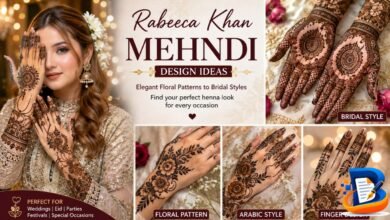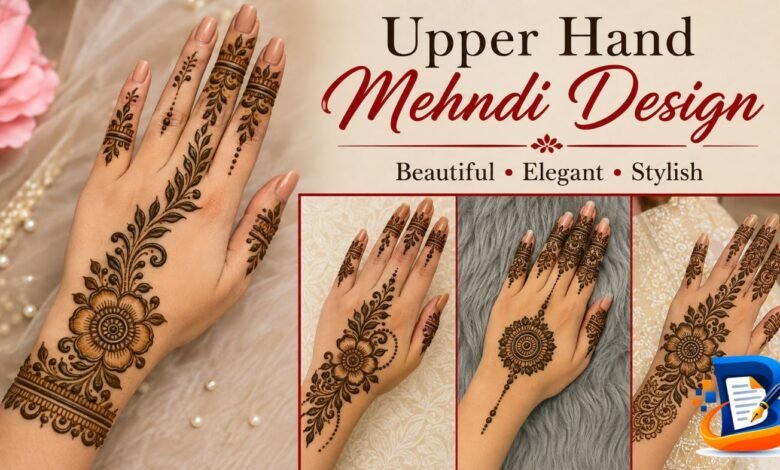
Mehndi is an important part of Indian celebrations, especially weddings, festivals and family functions. While full-hand mehndi remains a popular choice, many women now prefer designs that look stylish without covering the entire palm. This is where an upper hand mehndi design becomes a beautiful option.
Upper-hand designs generally focus on the upper area of the hand, including the back of the hand and fingers. Depending on the occasion, the design can be delicate and minimal or detailed enough for a bridal look. Floral motifs, leafy trails, mandala patterns, Arabic curves, jaali work and traditional Indian elements can all be adapted to this style.
The best part is that an upper-hand design can be customised according to your outfit, occasion and personal taste. A simple pattern may suit a small family function, while a more elaborate arrangement can complement a wedding or engagement look.
This guide explores different upper hand mehndi design styles, how to choose one, which patterns work well on different occasions, and practical tips for getting a neat and attractive result.
What Is an Upper Hand Mehndi Design?
An upper hand mehndi design refers to a mehndi pattern created mainly on the upper or back portion of the hand rather than covering the entire hand. The exact placement can vary depending on the design.
Some patterns begin near the wrist and move towards the fingers. Others concentrate around the centre of the back of the hand. Finger detailing can also be added to create a balanced appearance without filling every part of the skin.
This style gives the hand a decorated appearance while keeping portions of the skin visible. As a result, it can create a lighter and more contemporary look compared with a heavily filled design.
Upper-hand mehndi is particularly useful when you want something elegant but not overly elaborate. It also works well when you want jewellery, nail art or bangles to remain visually noticeable.
Why Upper Hand Mehndi Is Popular
One reason this style appeals to many people is its flexibility. You do not have to choose between extremely simple mehndi and a completely filled bridal design. The upper hand can carry a carefully planned pattern while the remaining area stays relatively open.
Another advantage is the visual balance. Negative space around the motifs can make floral vines, mandalas and geometric details stand out more clearly.
The design can also be adapted to different occasions. For example, a small floral pattern may work for a casual celebration, whereas an intricate combination of flowers, paisleys and jaali details can create a more traditional wedding appearance.
The placement also makes the design suitable for people who want their mehndi to complement rather than dominate their overall look.
Simple Upper Hand Mehndi Design
A simple upper hand mehndi design is ideal when you prefer clean lines and limited detailing. Instead of filling the entire hand, the artist can create one central motif with a few supporting elements.
A small flower surrounded by leaves is one of the easiest concepts to adapt. A curved vine can then extend towards the fingers or wrist, depending on the desired composition.
Another option is a small mandala placed in the centre of the back of the hand. Fine lines around the mandala can provide detail while still leaving enough open space.
Simple designs are especially suitable for festivals, family gatherings, college functions and occasions where a heavy bridal pattern may feel excessive.
Arabic Upper Hand Mehndi Design
Arabic mehndi is known for flowing patterns, prominent floral motifs and curved arrangements. It is particularly attractive when used on the upper hand because the design naturally follows the shape of the hand.
A typical arrangement may begin near the wrist and travel diagonally towards the index or middle finger. Large flowers can be connected with leaves and curved stems.
The open spaces between the motifs are an important part of the overall look. Rather than filling every section, the design allows the skin to remain visible.
For an elegant appearance, the artist can use thicker outlines for the major flowers and finer details inside the petals. This creates contrast and helps the pattern remain clear after the mehndi stain develops.
Bridal Upper Hand Mehndi Design
Bridal mehndi usually involves more detail than everyday mehndi. However, an upper-hand bridal design does not necessarily have to cover every available area.
A detailed bridal arrangement can combine traditional motifs such as paisleys, flowers, peacocks, leaves, jaali patterns and ornamental borders. These elements can be arranged carefully across the upper hand to create a cohesive design.
For a wedding, symmetry can also be considered if similar patterns are planned for both hands. At the same time, perfectly identical designs are not compulsory. Two coordinated but slightly different patterns can give the hands a more artistic appearance.
If the bridal outfit already has heavy embroidery, a highly detailed mehndi design can create a rich traditional effect. If the outfit is comparatively minimal, a more delicate pattern may provide better visual balance.
Floral Upper Hand Mehndi Design
Floral patterns are among the most versatile choices for upper-hand mehndi. Flowers can be made large and prominent or small and delicate.
A central flower can act as the main focal point. Smaller flowers and leaves can then extend towards the fingers, wrist or sides of the hand.
Rose-inspired motifs, lotus-like flowers and simple five-petal flowers can all be interpreted in mehndi using different line arrangements. The important factor is maintaining clean spacing so that the floral elements remain recognisable.
For a modern look, floral motifs can be combined with thin leafy branches. This creates a light botanical appearance that works particularly well for engagements and festive occasions.
Mandala Upper Hand Mehndi Design
A mandala-inspired design can create a neat focal point on the back of the hand. The circular form naturally suits the central area and can be surrounded by petals, dots, fine lines and geometric details.
A smaller mandala works well for minimal mehndi. A larger mandala can become the centrepiece of a more elaborate design.
The surrounding space should be considered carefully. If the mandala is too large for the available area, the design may look crowded. On the other hand, leaving some open skin around it can make the central pattern appear more defined.
Mandala designs also pair nicely with decorated fingers. The finger patterns can remain relatively simple so that attention stays on the central motif.
Minimal Upper Hand Mehndi Design
Minimal mehndi is a good choice for people who like understated decoration. The design may contain only a few flowers, leaves, lines or small geometric motifs.
One attractive approach is to create a thin vine across the upper hand. Small leaves can be placed along the vine, with tiny dots used to finish the composition.
Another approach is to decorate only one or two fingers while keeping the rest of the hand mostly open.
Minimal designs are particularly useful when you want mehndi to complement statement rings, bracelets or other accessories.
Finger-Focused Upper Hand Mehndi
The fingers can dramatically change the appearance of an upper-hand design. Even a relatively simple back-of-hand pattern can look more complete when the fingers receive coordinated detailing.
Finger designs may include small flowers, curved lines, checks, dots, leafy elements or traditional bands.
There is no need to fill every finger equally. Leaving some fingers lightly decorated can create an interesting contrast.
For a modern look, a design can concentrate on the index and middle fingers while using smaller motifs on the remaining fingers. For a more traditional appearance, all fingers can carry coordinated patterns.
Jaali Upper Hand Mehndi Design
Jaali work creates a mesh-like effect using intersecting lines and decorative shapes. It can be incorporated into the upper hand as a background element around larger motifs.
For example, a flower can be placed in the centre while a delicate jaali pattern surrounds it. Alternatively, jaali details can be used near the wrist or between floral motifs.
This technique can make a design appear detailed without relying entirely on large filled sections.
Because jaali patterns depend heavily on spacing and line consistency, they usually look best when drawn carefully with a steady cone.
Peacock-Inspired Upper Hand Design
The peacock is a familiar motif in traditional Indian mehndi. Its curved body, decorative feathers and flowing shape can be adapted beautifully to the back of the hand.
A peacock motif can serve as the main focal point, with flowers and leaves surrounding it. The feather area can be decorated with fine patterns to add visual detail.
This style is particularly appropriate for weddings and traditional celebrations because the motif has a strong connection with Indian decorative art.
However, a peacock does not have to make the design heavy. A smaller, simplified peacock can be incorporated into a lighter composition as well.
How to Choose the Right Upper Hand Mehndi Design
The occasion should be the first consideration. A simple design may be more practical for a small function, while weddings often provide an opportunity for richer detailing.
Your outfit is another important factor. Traditional Indian outfits with embroidery, zari or detailed prints can work well with classic mehndi motifs. Contemporary outfits may pair nicely with minimal, floral or Arabic-inspired patterns.
You should also consider the amount of time available for application. Intricate designs require more time and concentration than simple patterns.
Hand shape and available space matter as well. A good mehndi artist can adjust the size of flowers, paisleys and other motifs to fit the natural shape of the hand.
Upper Hand Mehndi Styles for Different Occasions
| Occasion | Suitable design style | Overall look |
|---|---|---|
| Wedding | Detailed floral, bridal, peacock or jaali pattern | Traditional and elaborate |
| Engagement | Floral, Arabic or mandala design | Elegant and balanced |
| Mehndi ceremony | Rich floral, paisley and traditional motifs | Festive and decorative |
| Diwali or festival | Simple floral or mandala design | Graceful and festive |
| Family function | Minimal or Arabic pattern | Light and stylish |
| Casual celebration | Small floral or vine pattern | Simple and modern |
The table is a general styling guide rather than a fixed rule. Your outfit, jewellery and personal preference should ultimately guide the choice.
Upper Hand Mehndi Design for Brides
For brides, the upper hand can be used as a canvas for more meaningful and intricate patterns. Traditional bridal designs sometimes incorporate elements associated with weddings, family and personal stories.
However, there is no single correct bridal mehndi style. Some brides prefer dense traditional patterns, while others choose open designs with strong floral or geometric elements.
If the rest of the bridal mehndi is already detailed, the upper hand can use a clear focal motif instead of adding detail everywhere. This helps prevent the overall composition from becoming visually confusing.
The design should also work with the bridal jewellery. Heavy bangles, rings and hathphools can interact strongly with mehndi, so the placement of larger motifs should be considered before application.
How to Make an Upper Hand Mehndi Design Look Neat
Clean application begins with a good-quality mehndi cone that allows controlled lines. The cone should produce a consistent flow rather than suddenly becoming too thick or thin.
The design should also be planned before application. Even a quick mental layout can help determine where the central flower, vine, border or other main motif will sit.
Spacing is equally important. Crowding too many motifs into a small area can make the design difficult to read.
Fine detailing should be added after the main structure is established. This approach makes it easier to maintain proportion and avoid unnecessary corrections.
Common Mistakes to Avoid
One common mistake is choosing a design simply because it looks attractive in a photograph without considering the size and shape of your own hand. A pattern designed for a large canvas may need significant adjustment when used on a smaller hand.
Another mistake is adding too many unrelated motifs. Flowers, paisleys, mandalas, peacocks and geometric patterns can all look beautiful individually, but combining too many styles without a clear structure can make the final design look busy.
Uneven finger detailing can also affect the overall appearance. Finger patterns should generally relate to the main design rather than looking like separate decorations.
It is also better to avoid rushing intricate work. Fine mehndi requires control, and hurried application can result in uneven lines and inconsistent spacing.
Traditional Versus Modern Upper Hand Mehndi
Traditional upper-hand mehndi generally uses familiar Indian motifs such as paisleys, flowers, peacocks, leaves, jaali work and decorative borders.
Modern designs often make greater use of negative space, thin lines, geometric shapes and simplified floral patterns.
Neither approach is automatically better. The right choice depends on the occasion and the appearance you want.
A combination can also work beautifully. For example, a traditional floral motif can be paired with a modern open-space arrangement. This gives the design an Indian character while keeping the overall appearance light.
How to Match Mehndi With Jewellery
Jewellery and mehndi occupy the same visual area, especially around the fingers and wrist. Therefore, their relationship should be considered when selecting a design.
If you are wearing large rings or a prominent hathphool, keeping some areas of the hand less crowded can make both the jewellery and mehndi easier to appreciate.
With simple jewellery, you may have more freedom to choose a detailed design.
For bridal styling, it can be useful to show the mehndi artist the jewellery you plan to wear. This allows the pattern to be positioned around major rings, bangles or hand accessories.
How to Match Mehndi With Your Outfit
Colour is not usually a direct concern with fresh mehndi because the paste itself is green and the stain develops later. However, the visual style of the design can complement your outfit.
A traditional lehenga or saree may pair well with paisley, floral, peacock and jaali motifs. An anarkali or simpler festive outfit can work with an elegant Arabic or botanical pattern.
For a contemporary outfit, a minimal upper hand mehndi design can keep the overall appearance modern.
The goal is not to make the mehndi identical to the outfit. Instead, the design should support the overall styling without competing with it.
Upper Hand Mehndi Design Ideas for Beginners
Beginners may find it easier to start with motifs that do not require complicated symmetry.
Small flowers, leaves, curved vines and dots are relatively straightforward elements to practise. Once these shapes become comfortable, they can be combined into larger arrangements.
A simple central flower with a leafy trail is a useful concept because it allows you to practise line thickness, spacing and curves without creating an overly complicated pattern.
Mandala-style circles can also be practised separately before being incorporated into a full design.
The key is consistency. A simple design with clean lines often looks more attractive than a complicated design with uneven application.
Choosing Between Simple and Heavy Mehndi
The choice between simple and heavy mehndi should depend on the occasion, outfit and personal preference.
Simple mehndi is often more comfortable for people who want a lighter appearance and less coverage. It can also allow jewellery and nail art to remain prominent.
Heavy mehndi creates a richer traditional appearance and can be particularly suitable for bridal functions.
An upper hand mehndi design gives you the flexibility to sit somewhere between these two extremes. You can use a strong central motif with detailed fingers while still leaving parts of the hand open.
Aftercare for a Better Mehndi Stain
After applying mehndi, the paste needs time to dry and remain on the skin so that the colour can develop. The exact staining process can vary based on factors such as the mehndi mixture, skin and application.
Once the paste has dried, it should be handled carefully rather than immediately washed away with water. When removing dried mehndi, gently scrape or rub it off rather than aggressively washing the area.
Freshly removed mehndi may initially appear orange and can deepen over time. Therefore, judging the final shade immediately after removing the paste may not give you a complete idea of the eventual appearance.
For important events, it is sensible to allow enough time between application and the occasion so that the stain has time to develop.
Safe Mehndi Practices
Natural mehndi is traditionally made from henna, but not every product sold as “mehndi” contains only traditional henna. Some preparations may contain additional ingredients.
It is important to know what is being applied to your skin, particularly when using an unfamiliar product or cone. If you have previously reacted to a cosmetic or skin product, extra caution is sensible.
Do not assume that a very dark or very fast stain automatically means better-quality mehndi. The appearance of the stain can depend on several factors, including the ingredients and application process.
For children and people with sensitive skin, choosing a product carefully and avoiding unknown formulations is particularly important.
Frequently Asked Questions
What is the best upper hand mehndi design for a wedding?
A detailed floral, paisley, peacock, mandala or jaali-based design can work well for weddings. Brides can choose a richer arrangement, while wedding guests may prefer a lighter version.
Is an upper hand mehndi design suitable for beginners?
Yes. Simple floral vines, leaves, dots and small mandala patterns are easier starting points than highly intricate bridal compositions. Beginners should focus on clean lines and balanced spacing.
Can I combine Arabic and Indian mehndi styles?
Yes. Combining flowing Arabic-style floral arrangements with Indian motifs such as paisleys, peacocks or traditional detailing can create a distinctive design. The motifs should still follow a consistent overall layout.
Which design is better for an engagement ceremony?
An engagement is a good occasion for floral, Arabic, mandala or elegant minimal designs. The choice can depend on whether the outfit and jewellery are traditional or contemporary.
How much of the hand should an upper-hand design cover?
There is no fixed coverage requirement. The design can focus on the centre of the back of the hand, extend towards the wrist, or continue towards the fingers. The amount of coverage should match the desired style.
Can an upper hand design be used for bridal mehndi?
Yes. An upper hand design can be part of a bridal mehndi arrangement. It can include detailed traditional motifs while leaving selected areas open for contrast.
How can I make my upper-hand mehndi look more modern?
Using negative space, thin lines, simplified flowers, geometric elements and limited finger detailing can give the design a modern appearance.
Should the mehndi design match my jewellery?
It does not have to match exactly, but coordination can improve the overall look. When jewellery is heavy, leaving some space around rings and hand accessories can help both the mehndi and jewellery stand out.
Final Thoughts
An upper hand mehndi design is a versatile choice for anyone who wants decorated hands without necessarily covering the entire surface with dense mehndi. From simple floral vines and elegant mandalas to Arabic arrangements, peacock motifs and detailed bridal patterns, there are plenty of ways to personalise the style.
The most attractive design is not always the most complicated one. Good spacing, clean lines, suitable motifs and thoughtful placement can make a simple pattern look refined. For Indian weddings and festivals, traditional elements can add cultural character, while negative space and minimal detailing can give the design a contemporary finish.
Before choosing your pattern, consider the occasion, outfit, jewellery, available time and the amount of coverage you prefer. With the right combination, an upper hand mehndi design can become a graceful part of your overall festive or bridal look.